Morgan Albrecht · 4 September 2026
Shifting Domain Registrars and Maintaining Organic Traffic in Specialized Markets
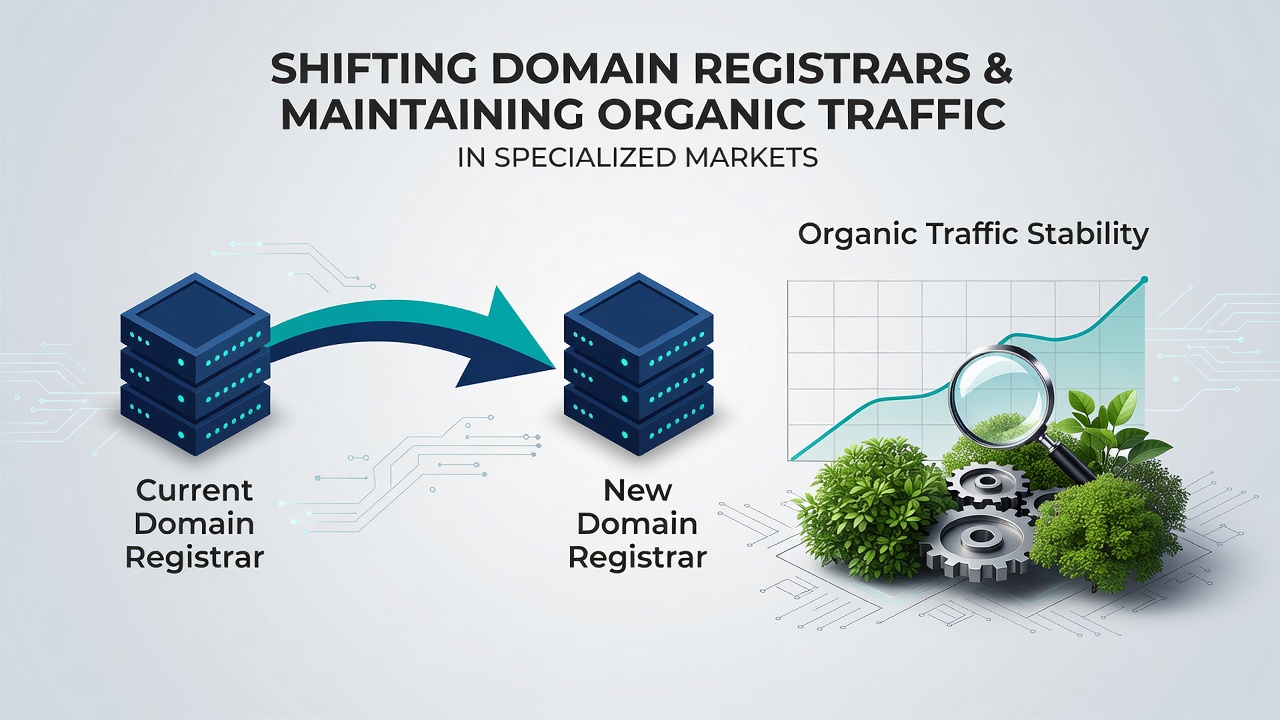
Companies operating in specialized markets often transfer domain registrars to secure better pricing, enhanced security features, or improved management tools, and such moves require careful handling to preserve organic traffic levels. Research from industry reports indicates that improper transfers can disrupt DNS configurations, leading to temporary indexing issues that affect search visibility. Observers note that registrars handle authorization codes and transfer locks differently, which creates the need for precise coordination between outgoing and incoming providers.
Key Steps in Registrar Transfers
Preparation begins with unlocking the domain at the current registrar while obtaining the authorization code, and this process typically takes a few days to complete under standard protocols established by ICANN. Experts recommend verifying all existing DNS records, including A, CNAME, MX, and TXT entries, before initiating the transfer because any mismatch can interrupt email delivery and website resolution. Data shows that businesses in niche sectors such as medical equipment or industrial components face heightened risks since their traffic often depends on consistent search engine rankings tied to exact domain history.
Once the transfer request is submitted, the new registrar sends confirmation to the registrant, and the process usually concludes within five to seven days unless extended by the losing registrar. Those who have managed multiple transfers point out that monitoring propagation through tools like DNS lookup services helps identify delays early, allowing quick corrections. In specialized markets where regulatory compliance adds layers of scrutiny, maintaining accurate WHOIS data throughout the transition supports continued trust signals from search engines.
Protecting Organic Traffic During the Move
Organic traffic maintenance relies on stable server configurations and uninterrupted indexing, so administrators often set up temporary redirects or parallel hosting during the switchover period. Studies from academic sources reveal that even brief downtime can lead to crawl budget reductions, particularly for sites with complex sitemaps in competitive verticals. People managing e-commerce platforms in specialized categories frequently cross-check Google Search Console data immediately after transfer to confirm that impressions and clicks remain steady.

Analytics platforms provide the metrics needed to track referral patterns and keyword performance, and integration with these systems before the move enables side-by-side comparisons. According to figures from regulatory bodies in various regions, domains associated with licensed industries must also satisfy additional verification steps that can extend transfer timelines. What's interesting is how minor DNS propagation variances across global networks sometimes create uneven traffic dips that resolve only after full cache clearing by major search engines.
Monitoring and Recovery Practices
Post-transfer monitoring involves daily reviews of server logs and crawl statistics, with adjustments made to canonical tags or hreflang attributes if regional targeting plays a role. Research indicates that sites in specialized markets recover faster when they maintain consistent backlink profiles and avoid content alterations during the registrar shift. Observers have documented cases where proactive submission of updated sitemaps through search console interfaces accelerated re-indexing, restoring previous traffic volumes within two weeks.
September 2026 marks a period when several registrars introduced enhanced API integrations for bulk record management, allowing teams to automate verification processes that previously required manual intervention. External data from international organizations shows reduced error rates among users who adopted these tools early. Those overseeing high-value domains in technical fields often combine registrar transfers with SSL certificate renewals to prevent mixed content warnings that could otherwise erode user trust and search rankings.
Industry Examples and Data Points
One documented instance involved a supplier of specialized laboratory equipment whose organic sessions dropped 12 percent during a registrar change due to an overlooked MX record issue, yet full recovery occurred after targeted fixes. Another case from the automotive parts sector demonstrated that pre-transfer audits of name server delegations prevented similar disruptions. Reports compiled by research institutions highlight that domains with strong historical authority tend to rebound more quickly because search algorithms weigh established trust factors heavily.
Coordinated planning between technical teams and marketing departments ensures that any temporary fluctuations receive prompt attention through paid traffic supplements if needed. Figures released by government agencies in multiple jurisdictions confirm that proper documentation of transfer steps supports compliance audits common in regulated industries. And while specialized markets present unique challenges around data privacy and localization, the underlying mechanics of registrar shifts remain consistent across sectors.
Conclusion
Successful registrar transfers in specialized markets depend on thorough preparation, ongoing traffic monitoring, and adherence to established technical standards that minimize disruption. Evidence from multiple sources underscores the value of systematic record verification and prompt issue resolution in preserving search performance. Organizations that integrate these practices report sustained visibility even amid infrastructure changes.