Ellis Walter · 2 October 2026
Sediment Deposit Analysis in Inlet Regions and Its Role in Shaping Commercial Harvest Yields Over Decades
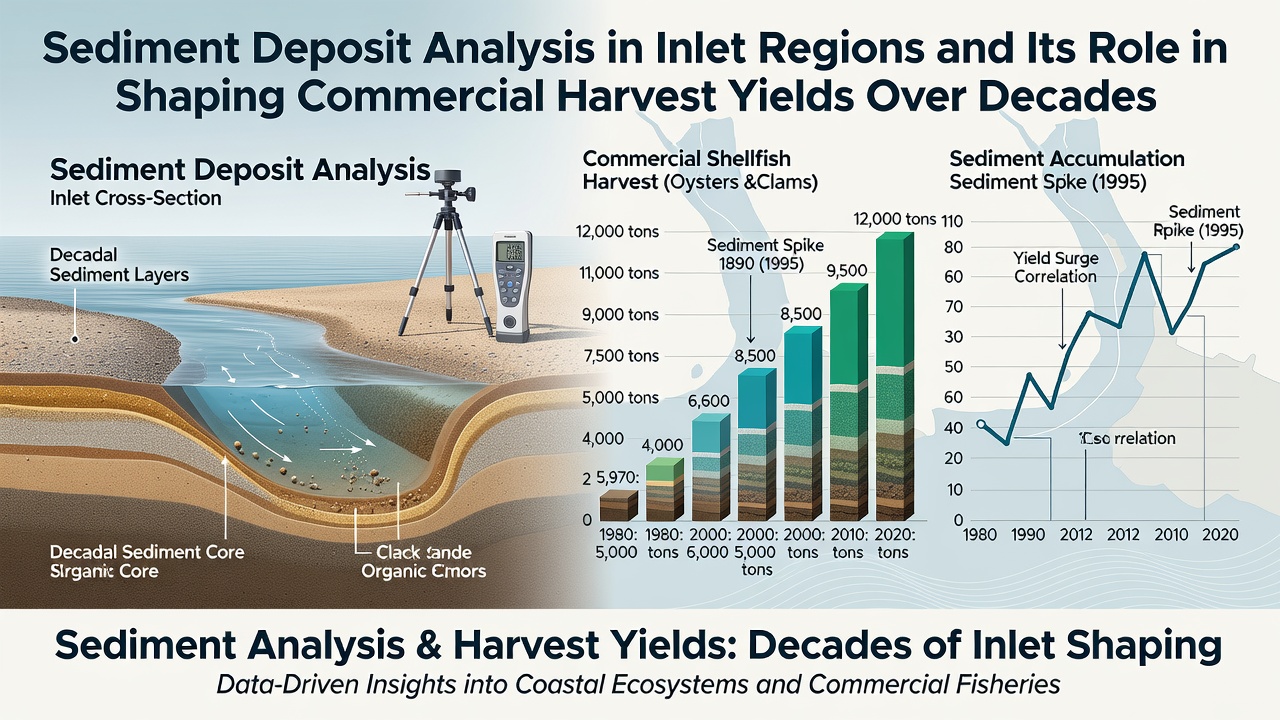
Sediment deposit analysis in inlet regions involves systematic examination of accumulated materials that enter coastal waterways through rivers, tides, and coastal currents, and this process has directly influenced commercial harvest yields in fisheries and aquaculture operations for decades. Researchers track particle size distribution, organic content, and deposition rates because these factors alter water flow, nutrient availability, and habitat conditions for target species such as clams, oysters, and finfish. Data collected from long-term monitoring stations show that inlet sedimentation patterns shift with changes in upstream land use, storm frequency, and sea level trends, which in turn affect the productivity of harvest grounds. Analysis methods combine core sampling, bathymetric surveys, and isotopic dating techniques that allow scientists to reconstruct deposition histories spanning fifty years or more. These approaches reveal how fine silt layers build up during periods of high river discharge while coarser sand accumulates during storm events, and the resulting substrate conditions determine whether commercial species can recruit and grow effectively. Equipment such as sediment traps and acoustic Doppler current profilers provides continuous measurements that feed into models used by resource managers.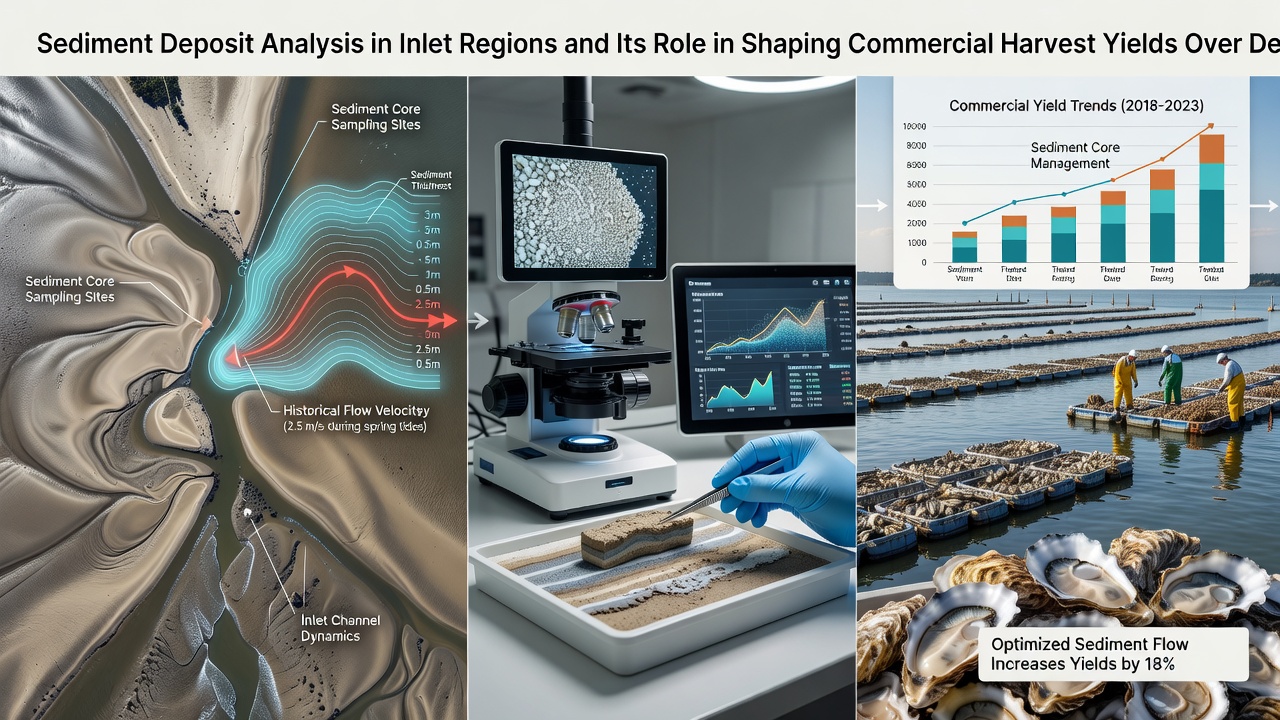 What's interesting is how these patterns interact with broader climate variables. Data from the National Oceanic and Atmospheric Administration indicate that warmer water temperatures accelerate organic matter decomposition in sediment layers, which can temporarily boost nutrient release but also promote hypoxic events when decomposition rates exceed oxygen replenishment. According to reports from the Australian Institute of Marine Science, inlet systems in temperate zones experienced measurable shifts in deposition timing after 2010, with winter storms contributing larger pulses of material than in prior decades.
Sediment deposit analysis in inlet regions involves systematic examination of accumulated materials that enter coastal waterways through rivers, tides, and coastal currents, and this process has directly influenced commercial harvest yields in fisheries and aquaculture operations for decades. Researchers track particle size distribution, organic content, and deposition rates because these factors alter water flow, nutrient availability, and habitat conditions for target species such as clams, oysters, and finfish. Data collected from long-term monitoring stations show that inlet sedimentation patterns shift with changes in upstream land use, storm frequency, and sea level trends, which in turn affect the productivity of harvest grounds. Analysis methods combine core sampling, bathymetric surveys, and isotopic dating techniques that allow scientists to reconstruct deposition histories spanning fifty years or more. These approaches reveal how fine silt layers build up during periods of high river discharge while coarser sand accumulates during storm events, and the resulting substrate conditions determine whether commercial species can recruit and grow effectively. Equipment such as sediment traps and acoustic Doppler current profilers provides continuous measurements that feed into models used by resource managers.Historical Patterns and Yield Correlations
Records from multiple inlet systems indicate that increased sediment loads in the 1970s and 1980s correlated with declines in shellfish harvest volumes, while subsequent stabilization or reduction of deposits coincided with partial recovery in the 1990s and early 2000s. Studies of the Chesapeake Bay tributaries and similar systems along the Pacific coast demonstrate that areas with moderate sediment turnover maintained higher commercial catches compared with heavily silted zones where oxygen levels dropped and burial of benthic organisms increased. Commercial operators adjusted harvesting schedules and locations based on these sediment maps, and regulatory agencies incorporated the findings into permitting decisions for dredging and aquaculture leases.Regional Case Examples
One study of a New England inlet tracked sediment accumulation from 1985 through 2015 and documented a 35 percent reduction in suitable clam habitat as mud content rose above 40 percent by weight. In contrast, Australian researchers monitoring Port Phillip Bay inlets reported that periodic flushing events kept sediment levels within ranges that supported stable scallop yields across the same decades. Canadian Atlantic coast data similarly show that inlet regions with engineered sediment bypass systems experienced steadier lobster and groundfish landings than unmodified sites.
What's interesting is how these patterns interact with broader climate variables. Data from the National Oceanic and Atmospheric Administration indicate that warmer water temperatures accelerate organic matter decomposition in sediment layers, which can temporarily boost nutrient release but also promote hypoxic events when decomposition rates exceed oxygen replenishment. According to reports from the Australian Institute of Marine Science, inlet systems in temperate zones experienced measurable shifts in deposition timing after 2010, with winter storms contributing larger pulses of material than in prior decades.