Morgan Albrecht · 30 October 2026
Patterns of Nutrient Cycling Observed in Shallow Coastal Waters Near Inlets and Their Links to Algal Bloom Occurrences
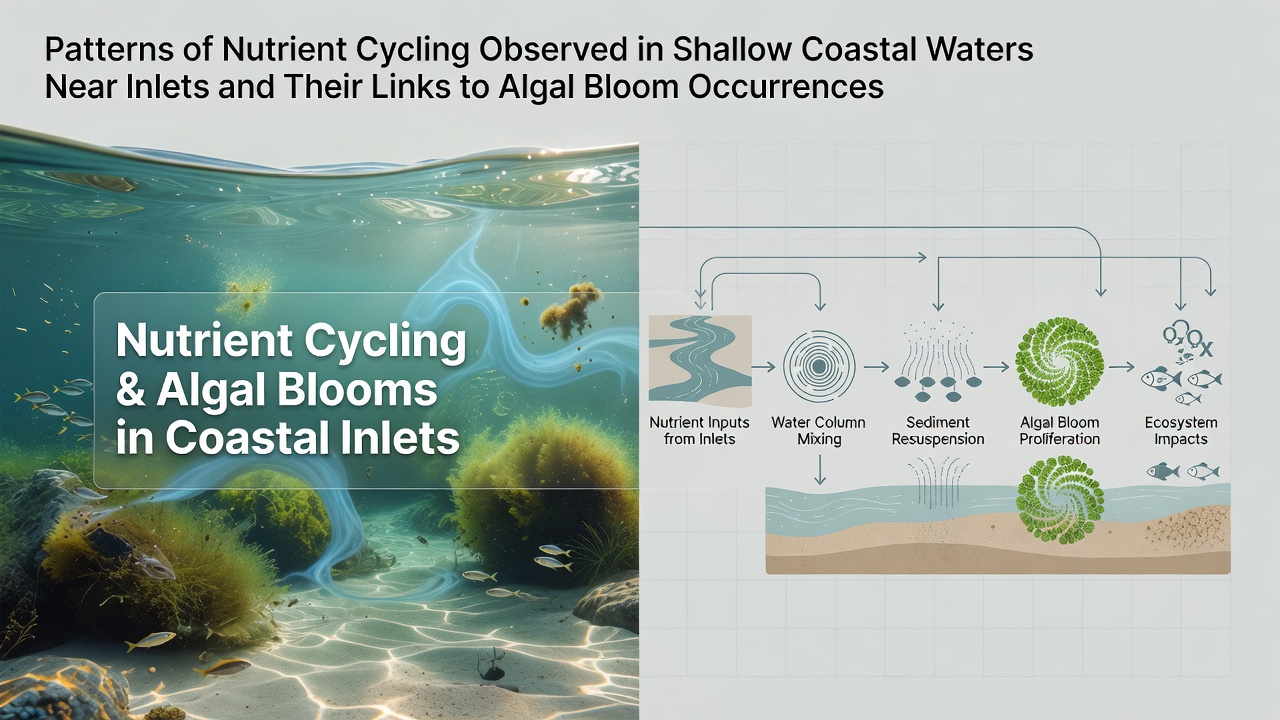
Shallow coastal waters near inlets display distinct nutrient cycling patterns driven by tidal exchanges, sediment resuspension, and freshwater inflows that deliver nitrogen, phosphorus, and organic matter into confined basins. These dynamics create localized hotspots where nutrients accumulate rapidly before dispersing into broader shelf waters. Researchers tracking these systems note that inlet proximity accelerates mineralization rates because water depths often stay below five meters, allowing sunlight to reach the seafloor and stimulate microbial activity throughout the water column.
Tidal Influences on Nutrient Distribution
Tides push and pull water masses through narrow inlet channels, mixing bottom sediments with surface layers and releasing bound nutrients during each cycle. Data collected through October 2026 from multiple monitoring arrays reveal that spring tides generate the strongest pulses, elevating dissolved inorganic nitrogen concentrations by up to forty percent within hours of peak flow. Ebb tides then export some of these nutrients seaward, yet a substantial fraction remains trapped in adjacent embayments where reduced flushing permits repeated recycling between sediments and the water column.
Observers note that inlet geometry further modulates these exchanges, with wider mouths permitting greater oceanic dilution while constricted passages retain nutrient loads longer. Studies conducted along temperate coastlines demonstrate that such retention correlates directly with elevated ammonium and phosphate levels measured at stations positioned less than two kilometers from inlet throats. This spatial gradient helps explain why bloom initiation frequently occurs first in the shallowest pockets nearest these exchange points.
Sediment-Water Interactions and Microbial Processing
Sediments in these environments act as both sources and sinks, storing organic matter delivered by rivers and then releasing regenerated nutrients through bacterial decomposition. Benthic flux measurements indicate that oxygen penetration depths shrink during warmer months, shifting microbial communities toward anaerobic pathways that favor ammonium production over nitrate. When tidal currents resuspend these layers, the released compounds become immediately available for uptake by phytoplankton residing in the photic zone.
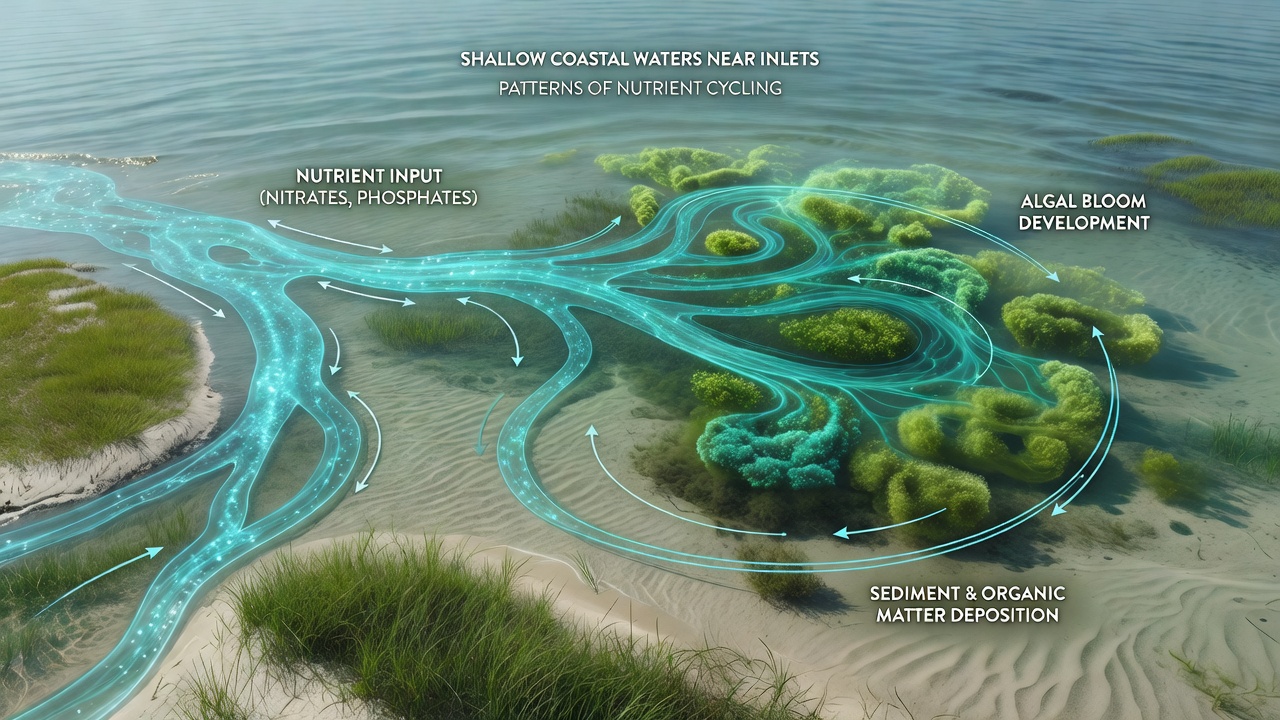
Long-term records from inlet-adjacent stations show seasonal peaks in sediment oxygen demand that coincide with temperature rises above twenty degrees Celsius. These conditions promote rapid turnover of phosphorus from iron-bound complexes, supplying an additional boost that can tip phytoplankton communities toward bloom formation. Because shallow depths limit vertical mixing, surface concentrations build faster than in deeper offshore waters, concentrating resources where light remains abundant.
Connections to Algal Bloom Development
Algal blooms emerge when nutrient pulses exceed grazing and dilution rates, allowing specific phytoplankton groups to dominate for weeks at a time. Monitoring programs document that dinoflagellate and diatom proliferations often follow inlet-driven nutrient spikes within seven to ten days, particularly when water residence times exceed three tidal cycles. Chlorophyll-a concentrations recorded near inlets routinely surpass twenty micrograms per liter during these events, compared with background levels below five micrograms per liter in adjacent open waters.
Research from the National Oceanic and Atmospheric Administration highlights how inlet proximity influences bloom species composition, with nitrogen-rich inflows favoring diatoms while phosphorus-enriched sediments support dinoflagellate dominance. Wind patterns and subsequent rainfall events further modulate these outcomes by altering stratification and delivering additional terrestrial nutrients. Data spanning multiple years confirm that bloom frequency rises in embayments where inlet exchange supplies at least sixty percent of total annual nitrogen loading.
Regional Observations and Temporal Trends
Comparative studies across different coastlines reveal consistent spatial patterns despite variations in climate and land use. In subtropical regions, year-round warmth sustains continuous cycling with less pronounced seasonal swings, whereas temperate sites show sharp spring and autumn maxima tied to temperature and river discharge. Records extending into late 2026 indicate that interannual variability tracks closely with precipitation anomalies, underscoring the role of terrestrial nutrient delivery routed through inlet channels.
Those who have examined sediment cores from these areas find that historic increases in nutrient accumulation align with documented rises in bloom reports over recent decades. This temporal correlation supports the view that inlet-mediated cycling serves as a key control point for bloom magnitude and duration across shallow coastal systems.
Conclusion
Patterns of nutrient cycling in shallow coastal waters near inlets create predictable conditions that facilitate algal bloom occurrences through repeated sediment resuspension, tidal retention, and microbial regeneration. Ongoing observations through October 2026 continue to refine understanding of these linkages, providing quantitative baselines for tracking how changes in hydrology or land-derived inputs alter bloom risks in these dynamic nearshore environments.